


Please Leave Us A Message
Privacy statement: Your privacy is very important to Us. Our company promises not to disclose your personal information to any external company with out your explicit permission.
 Wuxi Hengda Chemical Machinery Co., Ltd.
English


Wuxi Hengda Chemical Machinery Co., Ltd. has been a cornerstone in the chemical machinery industry since 1996. Specializing in high-performance stainless pressure vessels, reactors, and heat exchangers, we provide critical equipment that ensures safety, efficiency, and longevity for your production lines.
Our state-of-the-art facility spans over 20,000 square meters, equipped with advanced CNC plasma cutting, gantry machining centers, and automated welding systems. This technological edge allows us to deliver precision-engineered solutions that meet rigorous international standards, serving global leaders like BASF and Solvay.
Partner with Hengda for scalable, reliable stainless pressure vessel manufacturing that minimizes downtime and maximizes operational safety.
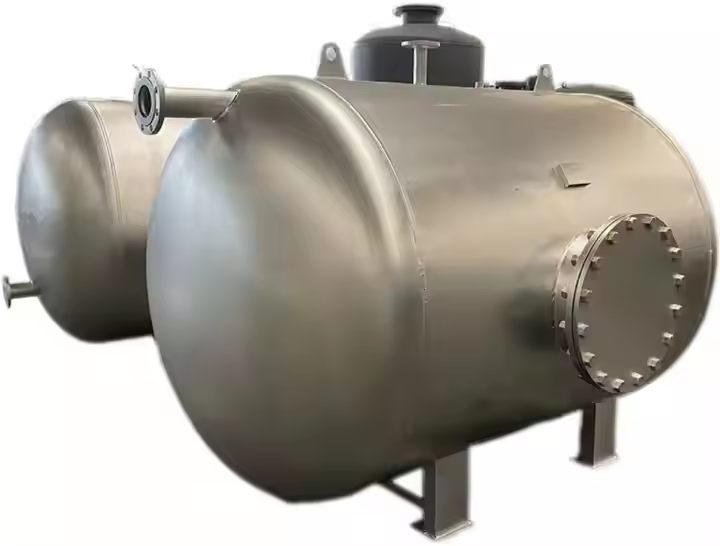
A stainless pressure vessel is a specialized containment structure designed to hold gases or liquids at a pressure substantially different from the ambient pressure. Constructed primarily from stainless steel grades such as 304, 316L, or duplex steels, these vessels are engineered to withstand extreme internal pressures and temperatures while resisting corrosion from aggressive chemical media.
Stainless steel offers an unparalleled combination of strength, ductility, and corrosion resistance. For chemical processing, this means longer service life, reduced maintenance costs, and compliance with strict hygiene standards. Unlike carbon steel, stainless vessels do not require internal linings for many corrosive applications, simplifying design and reducing weight.
At Wuxi Hengda, quality is embedded in every stage of production. Our facility utilizes CFD fluid software for stirring system design and holds national patents, ensuring optimal mixing efficiency and structural integrity.
We employ CNC boring and milling machines, plasma P+T automatic welding, and automatic argon arc welding for tube sheets. This automation eliminates human error, ensuring consistent weld quality and precise dimensional tolerances for your stainless pressure vessel.
Our operations are backed by a Production License for Pressure Vessels and a Radiation Safety License. We adhere to strict engineering codes, guaranteeing that every vessel meets or exceeds national and international safety regulations.
With over 70% market share in unsaturated resin equipment domestically, our vessels are trusted by top-tier chemical companies. Our "specialized, refined, distinctive, and innovative" enterprise status reflects our commitment to continuous improvement and technical excellence.
Selecting a supplier for custom stainless pressure vessels requires evaluating more than just price. You need a partner with deep technical expertise, proven track record, and robust manufacturing capabilities.
Look for suppliers who use advanced design tools like CFD simulation for reactor and vessel internals. Ask about their welding qualifications, NDT (Non-Destructive Testing) procedures, and experience with specific alloy grades. A supplier like Hengda, with patented stirring designs, offers deeper technical value.
A supplier with decades of experience and large-scale facilities (20,000+ sqm) can handle complex orders and ensure consistent quality. Check if they serve major industry players (e.g., BASF, Solvay) as a proxy for reliability and quality assurance standards.
Use this checklist to evaluate potential suppliers and ensure your investment in stainless pressure vessels is secure.
Procuring stainless pressure vessels involves navigating several common pitfalls. Understanding these helps mitigate risk.
Problem: Selecting the wrong stainless steel grade for the specific chemical environment leads to premature failure.
Solution: Work with experienced engineers who understand material science. Provide detailed process fluid compositions for accurate grade selection (e.g., 316L vs. Duplex).
Problem: Poor welding techniques can cause cracks, porosity, or loss of corrosion resistance in the heat-affected zone.
Solution: Prioritize suppliers using automated welding (TIG/MIG) and strict NDT protocols. Avoid manual-only fabrication for critical joints.
Problem: Custom pressure vessels often face delays due to supply chain bottlenecks or inefficient production planning.
Solution: Choose suppliers with large inventory of raw materials and proven track records of on-time delivery for large projects.
Problem: Missing or incomplete data books make future maintenance and regulatory audits difficult.
Solution: Require a comprehensive Data Book including design calculations, material certs, test reports, and as-built drawings before shipment.
Our stainless pressure vessels are versatile and widely used across various industries requiring safe and efficient containment of pressurized substances.
Ideal for reactors, storage tanks, and heat exchangers handling corrosive acids, bases, and solvents.
Used in bioreactors and purification systems where hygiene and cleanability are paramount.
Suitable for pasteurization, fermentation, and storage of food-grade liquids under pressure.
Applied in oil & gas refineries and renewable energy systems for high-pressure fluid handling.
When sourcing stainless pressure vessels, consider a supplier that combines heritage with innovation. Wuxi Hengda stands out for its deep industry roots and technological leadership.
With over 70% national market share in unsaturated resin equipment, Hengda's reputation is built on performance. Our vessels are trusted by global giants like BASF and Solvay, offering you peace of mind regarding quality and reliability.
Our use of CFD fluid software for stirring system design and national patents sets us apart. This means optimized mixing, lower energy consumption, and longer equipment life for your operations.
From initial design consultation to after-sales support, we provide end-to-end service. Our certified production licenses and radiation safety license ensure full regulatory compliance for your projects.
Our 20,000+ square meter facility with advanced CNC and automated welding equipment allows us to handle large-volume orders without compromising quality or lead times.
The most common grades are 304 and 316L stainless steel. 304 is suitable for general corrosive environments, while 316L offers superior resistance to chlorides and acids, making it ideal for harsh chemical processing applications. The choice depends on your specific process media and temperature requirements.
Lead times vary based on complexity, size, and material availability. Typically, standard vessels may take 4-8 weeks, while highly customized or large-scale reactors can take 8-12 weeks or more. Early engagement in the design phase helps streamline the process.
Manufacturers must hold relevant production licenses, such as China's Pressure Vessel Production License. Internationally, ASME U-Stamp or PED (Pressure Equipment Directive) certification may be required depending on your region and application. Always verify the supplier's credentials.
Yes, we specialize in OEM and ODM services. Our engineering team can work with your specifications or develop custom solutions tailored to your unique process requirements, including specialized stirring systems and heat exchange configurations.
Standard tests include hydrostatic pressure tests, pneumatic tests, and non-destructive testing (NDT) such as radiography (X-ray), ultrasonic testing (UT), and dye penetrant testing (PT). These ensure structural integrity and leak-tightness before shipment.
Regular inspection for signs of corrosion, erosion, or mechanical damage is crucial. Keep a log of operating parameters and perform periodic cleaning according to manufacturer guidelines. Promptly address any identified issues to prevent small problems from becoming major failures.
Contact

Send Inquiry
PRODUCT CATEGORIES
FOLLOW US
Privacy statement: Your privacy is very important to Us. Our company promises not to disclose your personal information to any external company with out your explicit permission.
Fill in more information so that we can get in touch with you faster
Privacy statement: Your privacy is very important to Us. Our company promises not to disclose your personal information to any external company with out your explicit permission.