


Please Leave Us A Message
Privacy statement: Your privacy is very important to Us. Our company promises not to disclose your personal information to any external company with out your explicit permission.
 Wuxi Hengda Chemical Machinery Co., Ltd.
English


A stainless steel pressure tank is a specialized vessel designed to hold gases or liquids at pressures significantly higher than atmospheric pressure. Unlike standard storage tanks, these units are engineered with reinforced walls, precise welding standards, and integrated safety valves to withstand internal stress without compromising structural integrity.
Constructed primarily from grades such as 304 or 316L stainless steel, these tanks offer exceptional corrosion resistance, making them ideal for the cosmetics production equipment industry where product purity is paramount. The smooth interior surface prevents bacterial buildup and simplifies cleaning protocols, ensuring compliance with strict hygiene regulations.
Whether used for mixing active ingredients, storing bulk solvents, or facilitating chemical reactions, a high-quality pressure vessel ensures consistent performance and extends the operational lifespan of your production line.
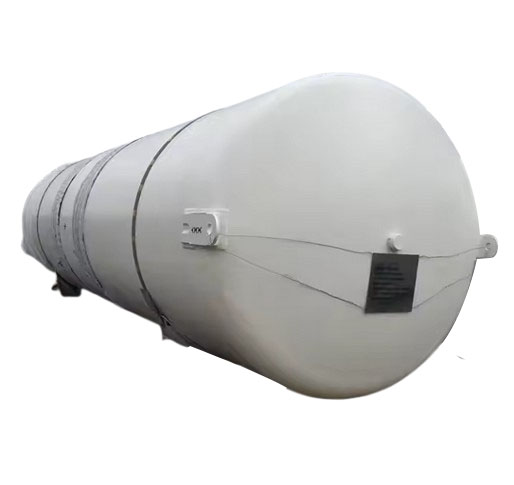
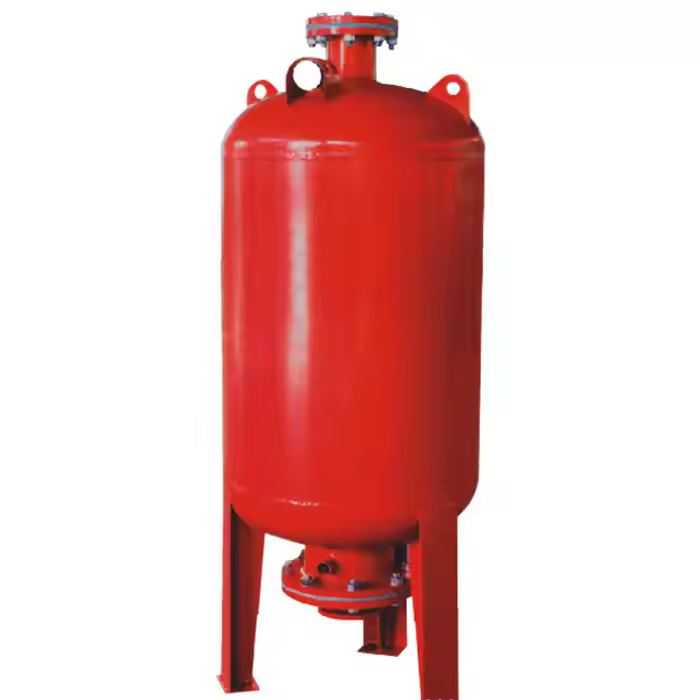
At Wuxi Hengda Chemical Machinery Co., Ltd., quality is not an afterthought—it is the foundation of our engineering. Established in 1996, we have spent over two decades refining the art of pressure vessel manufacturing. Our facility spans over 20,000 square meters and is equipped with state-of-the-art automation, including CNC plasma cutters, gantry machining centers, and automatic argon arc welding systems.
Every stainless steel pressure tank produced undergoes rigorous testing. We hold the official production license for pressure vessels and a radiation safety license, ensuring that all welds meet international non-destructive testing standards. This commitment to precision has allowed us to secure contracts with global leaders like BASF and Solvay.
Our reactors and vessels utilize CFD fluid software for stirring system design, backed by national patents. This technological edge ensures uniform mixing and thermal efficiency, directly reducing your energy costs and improving batch consistency.
Selecting the correct industrial pressure tank requires more than just matching volume specifications. You must consider material compatibility, pressure ratings, and thermal dynamics specific to your production workflow. Here is what procurement managers should prioritize:
For cosmetics and pharmaceutical applications, 316L stainless steel is often preferred over 304 due to its superior resistance to chlorides and acidic environments. Ensure your supplier provides mill certificates verifying the alloy composition to prevent premature corrosion failure.
Verify the Maximum Working Pressure (MWP) and temperature limits against your process peaks. A robust high-pressure storage tank should include a safety factor of at least 1.5x your operating pressure to accommodate sudden surges without risking structural integrity.
The interior polish level (Ra value) dictates cleanability. For sanitary applications, a mirror-polished interior prevents residue accumulation. Ask for Ra values below 0.4 microns to ensure easy passivation and CIP (Clean-in-Place) compatibility.
If your process involves reactors, CFD-simulated agitator designs are crucial. Proper impeller geometry ensures homogenous blending of viscous cosmetic bases, eliminating dead zones and reducing processing time per batch.
Before finalizing a purchase order for custom pressure tanks, use this checklist to mitigate risk and ensure vendor accountability. Each item represents a critical checkpoint in the B2B procurement lifecycle.
Procurement teams often encounter specific challenges when importing chemical machinery. Understanding these pitfalls beforehand can save significant time and capital.
Poor welds are the primary cause of pressure vessel failure. Suppliers using outdated manual welding techniques without automated controls may produce weak joints. Always mandate automated TIG/MIG welding for critical seams.
Using incorrect stainless steel grades (e.g., 304 instead of 316L) in chloride-rich environments leads to pitting corrosion. Ensure material specs match your exact chemical formulation, not just general "stainless" claims.
Low-cost vessels may come with generic relief valves that fail under rapid pressure spikes. Specify certified safety devices rated for your maximum allowable working pressure (MAWP) to protect personnel and assets.
When evaluating potential partners for large-scale pressure vessel projects, look for manufacturers who demonstrate vertical integration and technological innovation. A supplier that controls the entire production chain—from CNC cutting to CFD simulation—offers better price stability and quality control.
Prioritize suppliers utilizing CFD software for reactor design. This technology minimizes trial-and-error, ensuring your stainless steel mixing tank performs optimally from day one. Look for patent holdings as proof of R&D capability.
Factories equipped with gantry machining centers and automatic hole-opening machines reduce human error. High automation correlates with tighter tolerances and smoother internal finishes, which is critical for sanitary industries like cosmetics.
A supplier with experience serving multinational corporations (like BASF or Solvay) understands international compliance standards. Their processes are likely audited regularly, providing you with an extra layer of supply chain security.
Ensure the manufacturer holds all necessary local and international licenses, including radiation safety permits if ultrasonic testing is involved. This demonstrates a mature quality management system.
A storage tank is typically designed for atmospheric pressure or very low pressure, whereas a pressure vessel is engineered to withstand internal pressures significantly higher than atmospheric levels. Pressure vessels require thicker walls, specialized welding, and rigorous certification (such as ASME or PED) to ensure safety.
Yes. Leading manufacturers offer OEM customization for baffles, agitators, and heating jackets. Using CFD simulations, engineers can design custom internal geometries to optimize flow patterns for your specific viscosity and reaction requirements.
Grade 316L is generally recommended for cosmetics and pharmaceutical applications due to its enhanced resistance to corrosion from acids and salts found in formulations. It meets sanitary standards and is easier to sterilize compared to lower grades like 304.
Requirements vary by destination. Common certifications include ISO 9001 for quality management, ASME Boiler and Pressure Vessel Code stamps for North America, and PED (Pressure Equipment Directive) compliance for Europe. Your supplier should be able to provide third-party inspection reports.
We utilize fully automated CNC equipment for cutting and welding, minimizing human error. Every vessel undergoes hydrostatic testing and non-destructive testing (NDT). Our facility is licensed for pressure vessel production and adheres to strict "specialized, refined, distinctive, and innovative" enterprise standards.
Contact

Send Inquiry
PRODUCT CATEGORIES
FOLLOW US
Privacy statement: Your privacy is very important to Us. Our company promises not to disclose your personal information to any external company with out your explicit permission.
Fill in more information so that we can get in touch with you faster
Privacy statement: Your privacy is very important to Us. Our company promises not to disclose your personal information to any external company with out your explicit permission.