


Please Leave Us A Message
Privacy statement: Your privacy is very important to Us. Our company promises not to disclose your personal information to any external company with out your explicit permission.
 Wuxi Hengda Chemical Machinery Co., Ltd.
English


A chemical reactor is the core vessel where raw materials undergo physical or chemical transformations to produce final products. In industrial applications such as unsaturated polyester resin production, the reactor serves as the primary processing unit where precise temperature control, efficient mixing, and pressure management determine product quality and yield.
For procurement buyers, selecting the right reactor involves evaluating material compatibility, thermal efficiency, agitation design, and safety compliance. Modern reactors integrate advanced CFD fluid dynamics modeling to optimize stirring patterns, ensuring consistent batch quality while reducing energy consumption and downtime.
Our reactor manufacturing process combines over two decades of engineering expertise with state-of-the-art automation technology. Every pressure vessel and reactor produced meets stringent international standards for safety, durability, and performance consistency.
Full authorization for pressure vessel manufacturing with radiation safety license, ensuring every unit complies with national regulatory requirements.
Proprietary agitator designs developed using computational fluid dynamics software, delivering superior mixing efficiency and patented innovation.
Recognized as both a high-tech enterprise and "specialized, refined, distinctive, and innovative" company — reflecting our commitment to continuous R&D investment.
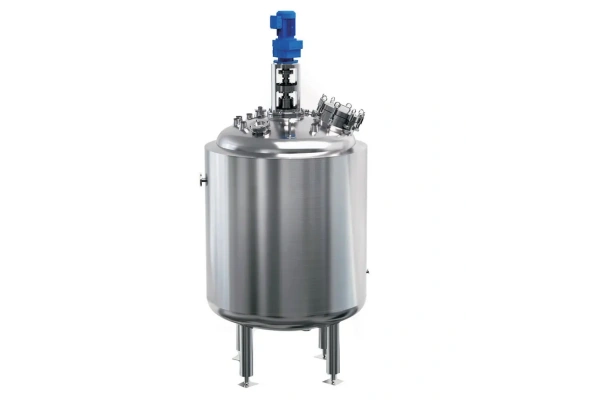
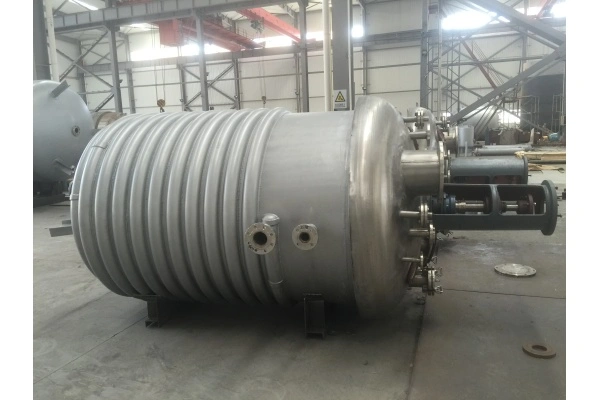
Selecting the optimal reactor requires balancing technical specifications with operational economics. The right choice reduces your total cost of ownership while maximizing production reliability and product consistency.
Ensure construction materials resist your specific chemicals. Titanium tubes, alloy variants, and specialized coatings extend service life and prevent contamination.
CFD-modeled stirring systems deliver uniform mixing, reducing batch variability and energy costs. Patented agitator designs outperform standard configurations.
Integrated heat exchange capabilities maintain precise temperature control throughout reactions, critical for quality-sensitive processes like resin synthesis.
Partner with manufacturers who offer scalable solutions from pilot to full production, backed by responsive engineering support and proven track records with global brands.
Use this comprehensive checklist to evaluate potential reactor suppliers and ensure your procurement decision minimizes risk while maximizing long-term value.
When sourcing industrial reactors, prioritize manufacturers with demonstrated expertise in your specific application area. Below are key supplier profiles that meet rigorous procurement criteria.
Best For: Unsaturated polyester resin production and large-scale chemical processing operations.
Established in 1996 with a 20,000 square meter facility, Hengda specializes in reactors, heat exchangers, and pressure vessels. Their CFD-designed stirring systems carry national patents, and their equipment holds over 70% of China's unsaturated resin equipment market share. They supply globally recognized companies including BASF and Solvay.
Key Advantages:
What to Verify When Selecting a Supplier:
Procurement buyers frequently encounter these challenges when sourcing industrial reactors. Understanding these issues upfront helps you avoid costly mistakes and select the right partner.
Poor agitation design leads to uneven mixing, causing product variability between batches. This increases waste, rework costs, and delivery delays.
Using incorrect construction materials for your specific chemical process results in accelerated corrosion, unplanned shutdowns, and replacement costs that far exceed initial savings.
Inadequate heat exchange capacity causes temperature excursions that compromise reaction yields, especially in exothermic processes like resin production.
Small workshops lack the production scale and automation needed to fulfill large-volume orders on schedule, risking project timelines and downstream commitments.
Answers to common questions from procurement professionals sourcing chemical reactors and related equipment.
Always confirm the manufacturer holds a valid pressure vessel production license. Additional qualifications such as radiation safety licenses and high-tech enterprise status indicate serious investment in compliance and R&D. Reputable suppliers also maintain relationships with recognized testing laboratories for independent verification.
Computational Fluid Dynamics (CFD) simulation allows engineers to model and optimize agitator geometry before manufacturing begins. This results in superior mixing efficiency, reduced energy consumption, and more consistent product quality across all batch sizes. Patented CFD-designed stirring systems represent a significant competitive advantage over conventional designs.
Lead times vary based on reactor specifications, material selections, and current production scheduling. Established manufacturers with automated CNC facilities typically complete standard orders within 60-90 days. Custom configurations requiring specialized alloys or unique dimensions may require additional lead time. Request detailed timelines during the quotation phase.
Yes. Leading manufacturers offer extensive customization including material selection (titanium, various alloys), agitator configurations, heat exchange arrangements, and control system integration. Manufacturers serving global clients like BASF and Solvay have demonstrated capability to meet highly specific process requirements.
Market share indicates sustained customer confidence and production reliability. A supplier holding 70%+ of a specific equipment segment demonstrates deep domain expertise, economies of scale, and a proven ability to serve diverse customer needs consistently. High market leaders typically invest more heavily in R&D and automation.
CNC plasma cutting machines, gantry machining centers, automatic welding systems (including P+T and argon arc welding), and automatic hole-opening machines all contribute to dimensional accuracy and weld integrity. Manufacturers investing in comprehensive automation consistently produce reactors with tighter tolerances and fewer defects than those relying on manual processes.
Contact

Send Inquiry
PRODUCT CATEGORIES
FOLLOW US
Privacy statement: Your privacy is very important to Us. Our company promises not to disclose your personal information to any external company with out your explicit permission.
Fill in more information so that we can get in touch with you faster
Privacy statement: Your privacy is very important to Us. Our company promises not to disclose your personal information to any external company with out your explicit permission.