


Please Leave Us A Message
Privacy statement: Your privacy is very important to Us. Our company promises not to disclose your personal information to any external company with out your explicit permission.
 Wuxi Hengda Chemical Machinery Co., Ltd.
English


A steel hydrogen storage tank is a high-pressure vessel specifically engineered to store compressed hydrogen gas safely and efficiently. Unlike standard industrial tanks, these vessels are constructed from specialized steel alloys capable of withstanding extreme pressures (typically 35MPa to 70MPa) while maintaining structural integrity against hydrogen embrittlement.
For the chemical and energy sectors, reliable storage is the backbone of the hydrogen economy. These tanks serve as critical infrastructure for fueling stations, industrial processing plants, and renewable energy integration projects. By choosing a robust steel design, operators ensure long-term durability and safety compliance in hazardous environments.
Wuxi Hengda Chemical Machinery Co., Ltd. brings over 25 years of expertise in pressure vessel manufacturing to the hydrogen storage sector. Our state-of-the-art facility in Jiangsu combines advanced CFD fluid software design with precision CNC automation to deliver storage solutions that meet the most demanding international standards.
Established in 1996, we hold specialized production licenses for pressure vessels. Our deep understanding of material science ensures our hydrogen storage tanks resist degradation over time, providing a safer total cost of ownership for buyers.
We utilize CNC plasma cutting, gantry machining centers, and automatic argon arc welding machines. This level of automation eliminates human error, ensuring every weld seam on your storage tank meets rigorous quality control standards for leak-proof performance.
Our equipment has secured orders from industry giants like BASF and Solvay. When you source a steel hydrogen storage tank from us, you benefit from a supply chain proven to handle complex, large-scale industrial requirements with reliability.
Manufacturing high-pressure hydrogen storage vessels requires more than just heavy machinery; it demands a culture of "survival through quality." Our production process integrates computational fluid dynamics (CFD) and strict material selection protocols to prevent hydrogen embrittlement—a common failure mode in standard steel tanks.
We hold full production licenses for pressure vessels and radiation safety licenses, ensuring every unit manufactured complies with national and international safety regulations.
Recognized as a "specialized, refined, distinctive, and innovative" enterprise, we continuously invest in R&D to improve the efficiency and capacity of our hydrogen storage systems.
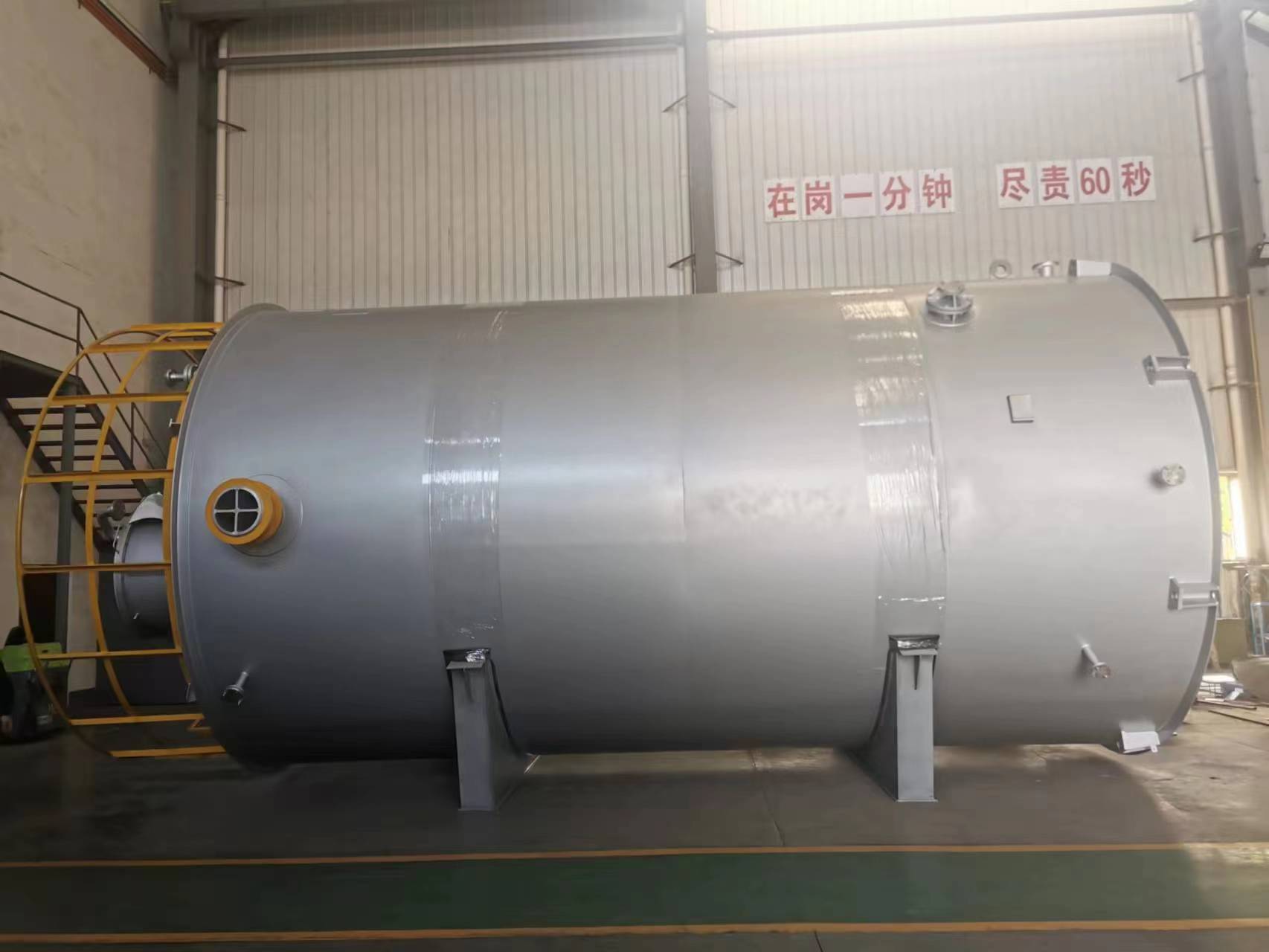
Selecting the optimal steel hydrogen storage tank involves evaluating material compatibility, pressure ratings, and manufacturer capability. Buyers must prioritize suppliers who offer comprehensive testing and certification to mitigate the risks associated with high-pressure gas storage.
Not all steel is suitable for hydrogen. Ensure your supplier uses low-alloy steels or stainless steel grades specifically tested for resistance to hydrogen-induced cracking. Ask for material traceability reports to verify composition.
Determine if you need 35MPa or 70MPa capacity. Reputable manufacturers apply significant safety factors beyond the working pressure. Verify that the tank design includes certified safety relief devices and rupture discs.
Only work with factories holding valid pressure vessel production licenses. Check for ISO certifications and experience with global clients (like BASF or Solvay) as indicators of consistent quality management systems.
Before finalizing a procurement order for hydrogen storage tanks, use this checklist to validate your supplier's capabilities and the product's suitability for your specific operational environment.
Verify the supplier holds current government-issued manufacturing permits.
Request test data proving the steel alloy's resistance to hydrogen degradation.
Ensure the factory uses CNC automatic welding for consistent, defect-free seams.
Prefer suppliers with proven track records serving major chemical enterprises.
Confirm the ability to tailor tank dimensions and pressure ratings to your site.
Ensure availability of maintenance guidance and spare parts for long-term operation.
When sourcing steel hydrogen storage tanks, prioritize partners who demonstrate vertical integration and technological innovation. Wuxi Hengda stands out by combining traditional metallurgical expertise with modern CFD simulation tools, offering buyers a partner that can solve complex engineering challenges rather than just producing standard catalogs items.
Suppliers that invest in CFD fluid software and patent technology (like Hengda's stirring systems) are better equipped to innovate and improve tank efficiency over time.
A supplier with >70% market share in related sectors (like unsaturated resin equipment) demonstrates massive scale and reliability, reducing the risk of supply chain disruptions.
Factories equipped with gantry machining centers and automatic hole-opening machines produce higher consistency. Avoid suppliers relying heavily on manual fabrication for pressure vessels.
Procuring high-pressure hydrogen storage vessels comes with specific risks. Understanding these common pitfalls helps buyers avoid costly delays and safety hazards.
Problem: Standard steel tanks may crack under prolonged hydrogen exposure.
Solution: Specify low-alloy steel grades with proven embrittlement resistance and request material test certificates.
Problem: Manual welding inconsistencies can lead to leaks in high-pressure environments.
Solution: Choose manufacturers using automatic argon arc welding and CNC processes for uniform, inspectable seams.
Problem: Tanks not meeting local pressure vessel codes can face regulatory shutdowns.
Solution: Verify the supplier holds active production licenses and radiation safety certificates relevant to your region.
Frequently asked questions about steel hydrogen storage tanks, manufacturing standards, and procurement best practices.
Typically, low-alloy steels or specific stainless steel grades are used due to their superior resistance to hydrogen embrittlement. The exact grade depends on the operating pressure and temperature requirements.
We employ automated welding technologies, rigorous non-destructive testing, and CFD simulations to validate design integrity. Our facility holds full pressure vessel production licenses, ensuring compliance with safety regulations.
Yes. We offer custom engineering services to tailor tank volume, pressure ratings (35MPa/70MPa), and connection types to fit your specific industrial or fueling station requirements.
Lead times vary based on complexity and volume. Due to our advanced automation and CNC equipment, we maintain efficient production cycles. Contact our sales team for a precise timeline based on your specifications.
Yes, we have a history of supplying major chemical companies worldwide, including BASF and Solvay. We manage export logistics and documentation to ensure smooth international delivery.
Contact

Send Inquiry
PRODUCT CATEGORIES
FOLLOW US
Privacy statement: Your privacy is very important to Us. Our company promises not to disclose your personal information to any external company with out your explicit permission.
Fill in more information so that we can get in touch with you faster
Privacy statement: Your privacy is very important to Us. Our company promises not to disclose your personal information to any external company with out your explicit permission.