


Please Leave Us A Message
Privacy statement: Your privacy is very important to Us. Our company promises not to disclose your personal information to any external company with out your explicit permission.
 Wuxi Hengda Chemical Machinery Co., Ltd.
English


An industrial air brake tank is a critical pressure vessel designed to store compressed air for pneumatic braking systems in heavy-duty vehicles and industrial machinery. Acting as the reservoir for your braking system, it ensures that sufficient air pressure is available instantly when needed, regardless of the compressor's current cycle.
Constructed from high-strength steel or specialized alloys, these tanks are engineered to withstand fluctuating pressures and harsh operating environments. They serve as the backbone of safety-critical systems in trucks, buses, trailers, and industrial equipment where hydraulic brakes may not be suitable.
Properly maintained air brake tanks reduce downtime and enhance vehicle safety by providing reliable energy storage for emergency braking scenarios. For fleet operators and industrial managers, selecting a certified pressure vessel manufacturer ensures compliance with international safety standards and operational reliability.
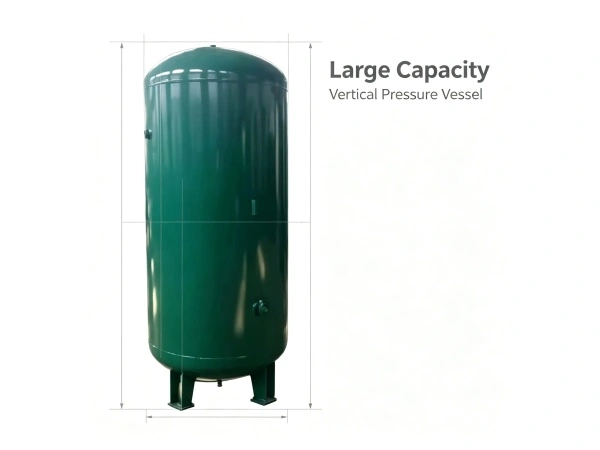
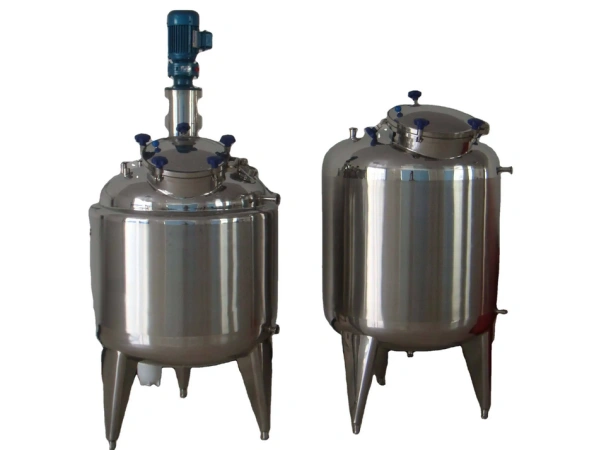
Wuxi Hengda Chemical Machinery Co., Ltd. brings over 25 years of expertise in pressure vessel manufacturing to every industrial air brake tank we produce. Our state-of-the-art facility spans 20,000 square meters and employs advanced CNC equipment including plasma cutting machines, gantry machining centers, and automatic welding systems.
Our manufacturing process incorporates CFD fluid software design for optimal internal flow dynamics, ensuring maximum efficiency and minimal pressure loss. Each tank undergoes rigorous quality testing including hydrostatic pressure tests, radiographic inspection, and dimensional verification to meet ASME, PED, and GB/T standards.
With certifications including pressure vessel production licenses and radiation safety qualifications, our facilities deliver consistent batch-to-batch quality that reduces your procurement risk and ensures regulatory compliance across global markets.
The material composition directly impacts tank longevity and performance. Carbon steel offers cost-effective strength for standard applications, while stainless steel or coated variants provide superior corrosion resistance for humid or chemically exposed environments. Selecting the right material reduces total cost of ownership by extending service intervals.
Match tank specifications to your system's maximum operating pressure and airflow requirements. Undersized tanks cause frequent compressor cycling and pressure drops, while oversized units add unnecessary weight and cost. Professional engineering consultation ensures optimal sizing for your specific application.
Verify that manufacturers hold valid pressure vessel production licenses and relevant international certifications. Compliance with ASME Section VIII, PED 2014/68/EU, or local regulations is non-negotiable for legal operation and insurance coverage in most jurisdictions.
Leading manufacturers offer custom configurations including multiple inlet/outlet ports, specialized mounting brackets, and integrated moisture drains. OEM partnerships enable tailored solutions that integrate seamlessly with existing vehicle or equipment platforms.
Use this comprehensive checklist to evaluate potential suppliers and ensure you select the best industrial air brake tank for your operational needs.
Many buyers receive tanks with varying wall thickness, weld quality, or surface finish between orders. This inconsistency stems from manufacturers lacking automated CNC equipment and standardized quality control procedures. Solution: Partner with facilities that use CNC boring, milling, and automatic welding machines to ensure repeatable precision.
Unpredictable lead times disrupt production schedules and vehicle assembly lines. Suppliers without digital project management often fail to provide timely updates. Solution: Work with established manufacturers who have transparent production tracking systems and dedicated account management for international clients.
Incomplete pressure test reports, missing material certificates, or inadequate certification can prevent customs clearance and regulatory approval. Solution: Verify supplier capabilities upfront and request sample documentation packages before placing orders.
Premature tank failure due to internal condensation or external corrosion costs thousands in replacements and downtime. Solution: Specify appropriate internal coatings, install automatic drain valves, and select manufacturers who offer corrosion-resistant material options.
When sourcing industrial air brake tanks, prioritize suppliers who demonstrate manufacturing sophistication, regulatory compliance, and long-term industry experience. The ideal partner combines advanced production capabilities with proven export expertise.
Look for facilities equipped with CNC plasma cutters, gantry machining centers, automatic argon arc welders, and plasma P+T welding systems. These technologies ensure dimensional accuracy, superior weld integrity, and consistent batch quality that meets international standards.
Verified pressure vessel production licenses, radiation safety qualifications, and international certifications (ASME, PED, ISO) are essential. These credentials protect you from liability issues and ensure your installations comply with local and international regulations.
Suppliers with decades of experience serving major chemical companies and holding significant market share demonstrate reliability and continuous improvement capability. Long-established manufacturers have refined their processes through extensive real-world application.
Carbon steel (such as Q345R or SA516 Grade 70) is the most common material for standard air brake tanks due to its excellent strength-to-cost ratio. For corrosive environments or marine applications, stainless steel (304 or 316L) provides superior resistance to rust and chemical attack. Your application environment should dictate material selection.
Most commercial vehicle air brake systems operate between 8-12 bar (116-174 psi). Tanks are typically rated for 1.5x to 2x the maximum working pressure, meaning a 16-24 bar design pressure is common. Always verify your compressor's maximum output and select a tank with adequate safety margins per ASME or PED guidelines.
Annual visual inspections are recommended, checking for corrosion, denting, and valve functionality. Hydrostatic retesting is typically required every 5-10 years depending on jurisdiction. Tanks showing significant wall thinning, cracks, or irreversible corrosion damage should be replaced immediately to maintain safety compliance.
Yes, reputable manufacturers offer extensive customization including varied volumes (50L to 500L+), multiple port configurations, specialized mounting flanges, and integrated moisture drainage systems. Custom designs ensure optimal fit within chassis constraints while meeting performance requirements for your specific vehicle or equipment platform.
Requirements vary by destination country. Common certifications include ASME U Stamp (USA), PED CE Marking (Europe), GB/T certification (China), and SONCAP (Nigeria). Ensure your supplier can provide complete documentation packages including material certificates, weld maps, pressure test reports, and third-party inspection certificates for smooth customs clearance.
Standard catalog items may ship within 2-4 weeks. Custom-designed tanks typically require 6-12 weeks depending on complexity, volume, and certification requirements. Established manufacturers with CNC automation and efficient workflow planning can often reduce lead times by 20-30% compared to traditional fabrication shops.
Contact

Send Inquiry
PRODUCT CATEGORIES
FOLLOW US
Privacy statement: Your privacy is very important to Us. Our company promises not to disclose your personal information to any external company with out your explicit permission.
Fill in more information so that we can get in touch with you faster
Privacy statement: Your privacy is very important to Us. Our company promises not to disclose your personal information to any external company with out your explicit permission.