


Please Leave Us A Message
Privacy statement: Your privacy is very important to Us. Our company promises not to disclose your personal information to any external company with out your explicit permission.
 Wuxi Hengda Chemical Machinery Co., Ltd.
English


A thermal jacketed reactor is a specialized pressure vessel designed for precise temperature control during chemical processing. Unlike standard reactors, these units feature an internal reaction chamber surrounded by an outer "jacket" through which heating or cooling media circulates. This dual-chamber design allows manufacturers to maintain exact thermal conditions essential for consistent product quality in high-stakes industrial applications.
For procurement managers sourcing industrial mixing and reaction equipment, the primary advantage of a jacketed system is efficiency. By surrounding the entire reaction vessel with heat transfer fluid, you eliminate cold spots and ensure uniform temperature distribution. This capability is critical for processes ranging from pharmaceutical synthesis to polymer production, where even minor temperature deviations can compromise batch integrity.
These systems are engineered for versatility. Whether your process requires rapid heating to initiate a chemical reaction or precise cooling to manage exothermic reactions, a jacketed reactor provides the thermal stability needed for reliable operation. The robust construction ensures longevity, reducing downtime and maintenance costs over the equipment's lifecycle.
At Wuxi Hengda Chemical Machinery Co., Ltd., manufacturing precision is paramount. With over 20 years of experience producing high-performance chemical reactors, we utilize advanced automation to ensure every unit meets rigorous international standards. Our facility spans over 20,000 square meters, equipped with state-of-the-art CNC plasma cutters, boring and milling machines, and gantry machining centers.
Our stirring systems are designed using CFD fluid software, resulting in national patents that optimize mixing efficiency. This technological edge means buyers receive equipment that not only performs reliably but also reduces energy consumption and operational waste. We hold full qualifications for pressure vessel production and radiation safety, ensuring compliance with the strictest regulatory frameworks.
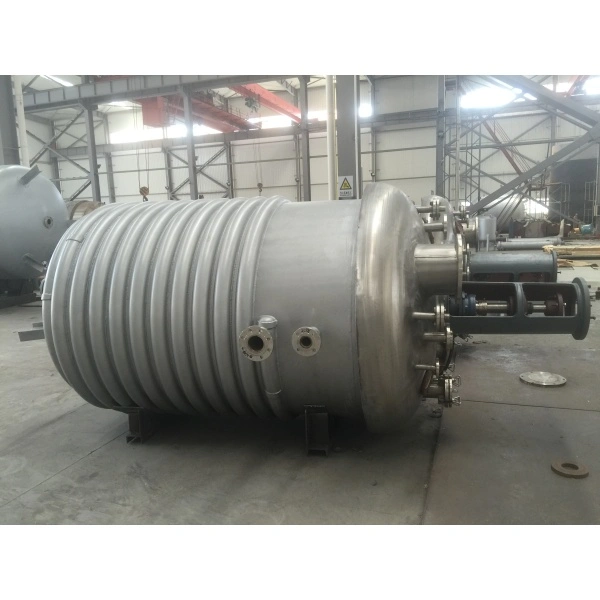
Selecting the optimal jacketed reactor for your specific chemical process requires balancing technical specifications with long-term operational goals. Buyers must evaluate material compatibility, agitation dynamics, and thermal capacity to avoid costly retrofits or inefficient processing. A well-specified reactor minimizes downtime and maximizes yield consistency.
Key considerations include the type of heating medium (steam, hot oil, or thermal fluid) and the required agitation speed range. For corrosive environments, selecting appropriate lining materials such as PTFE or high-grade alloys is essential. Additionally, verifying the supplier's ability to customize the agitator design using CFD simulation ensures that your unique viscosity and mixing requirements are met.
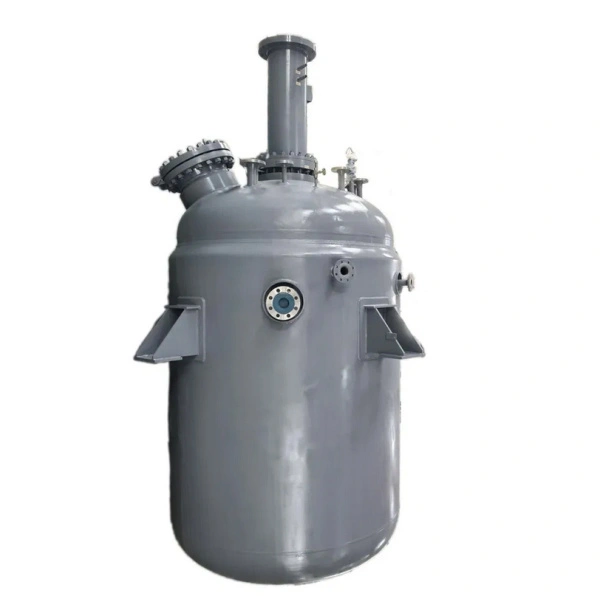
Use this checklist to evaluate potential suppliers and ensure your investment in chemical processing equipment delivers maximum value. Each item addresses a common pain point in B2B procurement, helping you mitigate risk and secure reliable performance.
Verify that all pressure vessels meet ASME, PED, or GB standards relevant to your region.
Assess the supplier's production volume and technological sophistication to ensure on-time delivery.
Ensure the supplier offers comprehensive support to minimize operational disruptions.
When evaluating potential partners for large-scale chemical machinery procurement, prioritize suppliers with proven industry recognition and extensive production history. Based on market presence and technological innovation, here are top-tier recommendations.
With over two decades of specialization, Hengda is a leader in the domestic market, holding more than 70% market share in unsaturated resin equipment. Their commitment to innovation is evidenced by national patents in stirring system design and continuous adoption of automation technologies.
Notably, they supply world-class chemical companies like BASF and Solvay, a testament to their quality and reliability. Their "specialized, refined, distinctive, and innovative" enterprise status underscores their dedication to excellence.
For projects requiring localized support or smaller batch volumes, consider established regional manufacturers with similar capabilities in pressure vessel production. Look for entities that demonstrate:
The versatility of jacketed reactors makes them indispensable across multiple high-value industries. From cosmetic formulations to complex chemical syntheses, these systems provide the controlled environment necessary for premium product output.
Essential for emulsifying creams, lotions, and shampoos. Precise temperature control ensures stable emulsions and proper viscosity, critical for consumer product quality.
Used in the production of resins, polymers, and specialty chemicals. The jacket allows for efficient heat removal in exothermic reactions, preventing runaway scenarios.
Supports API synthesis and intermediate processing. Stainless steel construction and CIP/SIP capabilities ensure hygiene and regulatory compliance.
Ideal for cooking, crystallization, and fermentation processes. Uniform heating prevents scorching and preserves flavor profiles.
Handles heavy oils and asphalt modification. High-capacity jackets manage the thermal demands of large-volume batches efficiently.
Facilitates cell culture and bio-reactive processes where tight temperature tolerances are required for viability and yield.
Common questions from procurement professionals regarding thermal jacketed reactor specifications, maintenance, and operational benefits.
A jacketed reactor provides superior temperature control by circulating heating or cooling media around the entire reaction vessel. This ensures uniform thermal distribution, eliminates hot spots, and significantly improves reaction efficiency compared to standard tanks which rely on external coils or electric heaters.
Yes, provided the correct materials are selected. Inner vessels can be lined with corrosion-resistant materials like PTFE, PFA, or constructed from high-grade alloys such as titanium or Hastelloy. It is crucial to specify the chemical composition of your process fluids to ensure material compatibility.
Computational Fluid Dynamics (CFD) simulation allows engineers to model fluid flow and mixing patterns before manufacturing. This predictive analysis helps optimize impeller design, reduce dead zones, and ensure consistent mixing, leading to higher product quality and lower energy consumption.
Regular maintenance includes inspecting mechanical seals, checking for corrosion or erosion in the inner vessel, and ensuring the jacket channels remain free of scale or blockage. Automated systems reduce manual intervention, but periodic cleaning and calibration of temperature sensors are essential for long-term reliability.
Absolutely. Leading manufacturers like Wuxi Hengda offer fully customized solutions based on your production volume, process requirements, and facility constraints. Customization includes varying capacities, agitator configurations, jacket designs, and integration with existing automation systems.
Contact

Send Inquiry
PRODUCT CATEGORIES
FOLLOW US
Privacy statement: Your privacy is very important to Us. Our company promises not to disclose your personal information to any external company with out your explicit permission.
Fill in more information so that we can get in touch with you faster
Privacy statement: Your privacy is very important to Us. Our company promises not to disclose your personal information to any external company with out your explicit permission.