


Please Leave Us A Message
Privacy statement: Your privacy is very important to Us. Our company promises not to disclose your personal information to any external company with out your explicit permission.
 Wuxi Hengda Chemical Machinery Co., Ltd.
English


A copper tube heat exchanger is a critical component in thermal management systems, designed to efficiently transfer heat between two fluids without mixing them. Utilizing copper's exceptional thermal conductivity and natural antimicrobial properties, these units are the industry standard for applications ranging from HVAC systems to industrial chemical processing.
At Wuxi Hengda Chemical Machinery Co., Ltd., we specialize in manufacturing high-performance heat exchangers that ensure maximum energy efficiency and operational reliability. Whether you are sourcing for refrigeration, chemical synthesis, or power generation, our copper-based solutions provide the durability and precision engineering required for demanding environments.
Our expertise spans over 20 years in the chemical machinery sector, allowing us to tailor heat exchange solutions that meet specific viscosity, pressure, and temperature requirements for your unique process.
Precision manufacturing is the backbone of reliable heat exchange performance. At our 20,000-square-meter facility in Wuxi, Jiangsu, we integrate state-of-the-art automation with rigorous quality control to produce industrial copper heat exchangers that exceed international standards.
We utilize advanced CNC plasma cutting, boring and milling machines, and gantry machining centers. This ensures tight tolerances for tube sheets and shells, minimizing leakage risks and maximizing heat transfer surface area.
Our production line features automatic argon arc welding machines for tube sheets and P+T CNC automatic welding systems. These technologies guarantee consistent weld integrity, crucial for handling high-pressure steam and corrosive chemicals.
Every reactor and heat exchanger design is optimized using CFD fluid software. This computational approach allows us to predict flow patterns and thermal efficiency before production, ensuring optimal performance for your specific application.
As a certified high-tech enterprise with production licenses for pressure vessels and radiation safety, we adhere to strict regulatory frameworks. Our copper tube heat exchanger manufacturer status guarantees compliance and traceability.
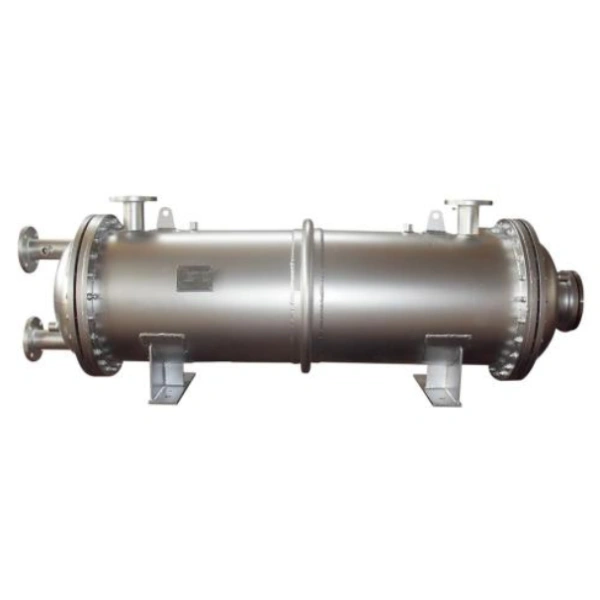
Selecting the optimal copper tube heat exchanger requires balancing technical specifications with long-term operational costs. Buyers must consider fluid properties, thermal loads, and environmental conditions to avoid premature failure or inefficiency.
While copper offers superior thermal conductivity, it may not suit all chemical environments. Evaluate the pH levels and corrosiveness of your fluids. For highly acidic or alkaline processes, consider our specialized alloy options or protective linings available through our custom chemical heat exchanger services.
Choose between shell-and-tube, plate, or finned designs based on your space constraints and maintenance access. Shell-and-tube configurations are robust for high-pressure applications, while plate exchangers offer compactness for limited footprints.
Assess your delta-T requirements and fouling factors. Our engineers use CFD modeling to optimize baffle spacing and tube arrangements, ensuring you get maximum heat transfer per square meter of surface area, reducing your initial capital expenditure.
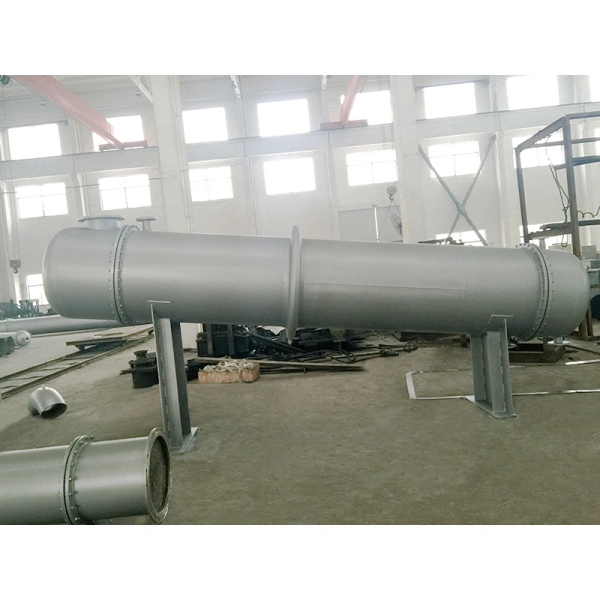
Use this checklist to evaluate potential suppliers and ensure your copper tube heat exchanger investment delivers value.
Design Standards: Does the supplier follow ASME, TEMA, or GB standards relevant to your region?
Material Certificates: Are mill certificates provided for all copper tubes and shell materials?
Testing Protocols: Does the manufacturer perform hydrostatic and pneumatic leak tests?
Production Capacity: Can they handle your volume within your required lead time? Wuxi Hengda serves major global clients like BASF.
R&D Support: Do they offer CFD analysis and custom design services?
After-Sales Service: Is technical support and maintenance guidance available post-delivery?
Procuring copper tube heat exchangers can present challenges if key pitfalls are overlooked. Here are common issues buyers face and how experienced manufacturers mitigate them.
The Problem: Mineral buildup reduces heat transfer efficiency over time, increasing energy costs.
The Solution: Specify exchangers with self-cleaning designs or easy-access tube bundles. Regular maintenance schedules and proper water treatment are also essential.
The Problem: Contact between dissimilar metals (e.g., copper tubes and steel shells) can cause rapid corrosion in electrolyte-rich environments.
The Solution: Use anti-corrosion coatings, sacrificial anodes, or insulating joints. Our team helps select compatible material pairings for your specific fluid chemistry.
The Problem: Poor welding or thermal stress can lead to leaks between shell and tube sides, contaminating products.
The Solution: Invest in automated argon arc welding and rigorous NDT (Non-Destructive Testing). Wuxi Hengda’s CNC welding ensures superior joint integrity.
When sourcing high-quality copper tube heat exchangers, partnering with a proven manufacturer reduces risk and ensures supply chain stability. Here is why global leaders trust Wuxi Hengda Chemical Machinery Co., Ltd.
Established in 1996, we have over 20 years of dedicated experience in reactors and heat exchangers. Our deep understanding of the unsaturated polyester resin market translates to equipment that is perfectly tuned for complex chemical processes.
We serve world-class chemical companies such as BASF and Solvay. Our equipment holds over 70% national market share in its category, demonstrating unmatched reliability and customer satisfaction.
Close cooperation with top Chinese research institutions and national patents in stirring systems highlight our commitment to innovation. We don’t just build to spec; we engineer better solutions.
Our production license for pressure vessels and radiation safety license ensures that every unit meets the highest safety and regulatory standards, giving you peace of mind for installation and operation.
Get answers to common questions about procurement, maintenance, and customization.
Lead times vary based on complexity and volume. Standard units may ship within 2-4 weeks, while custom-engineered copper tube heat exchangers requiring specific CFD modeling and fabrication typically take 6-10 weeks. Contact our sales team for a precise schedule based on your order.
Yes. While copper is excellent for many applications, we also offer solutions involving titanium tubes, alloys, and specialized linings for highly corrosive environments. Our engineering team will recommend the best material combination based on your fluid analysis.
Our facilities hold production licenses for pressure vessels and radiation safety licenses. All manufactured equipment undergoes strict quality inspections in accordance with national and international standards, ensuring safe and compliant operation.
Absolutely. We provide full OEM and ODM services. Whether you need a specific brand label or a completely custom design tailored to your plant’s infrastructure, our R&D department supports end-to-end development.
Copper has significantly higher thermal conductivity than stainless steel, meaning smaller heat exchanger sizes can achieve the same cooling/heating capacity. However, stainless steel offers greater mechanical strength and corrosion resistance in certain acids. The choice depends on your specific thermal and chemical requirements.
Contact

Send Inquiry
PRODUCT CATEGORIES
FOLLOW US
Privacy statement: Your privacy is very important to Us. Our company promises not to disclose your personal information to any external company with out your explicit permission.
Fill in more information so that we can get in touch with you faster
Privacy statement: Your privacy is very important to Us. Our company promises not to disclose your personal information to any external company with out your explicit permission.